


September 2026
Muir AI Named a Winner in the World Economic Forum's (WEF) AI for Resilient Supply Chains Challenge




Thank you for registering


August 2026
MLCC prices are up as much as 30 percent in 2026 and lead times have stretched to 20 weeks. The shortage is not about one scarce material. It is about a two-cent part multiplying across a BoM.
Looking to subscribe to our newsletter? Click here.
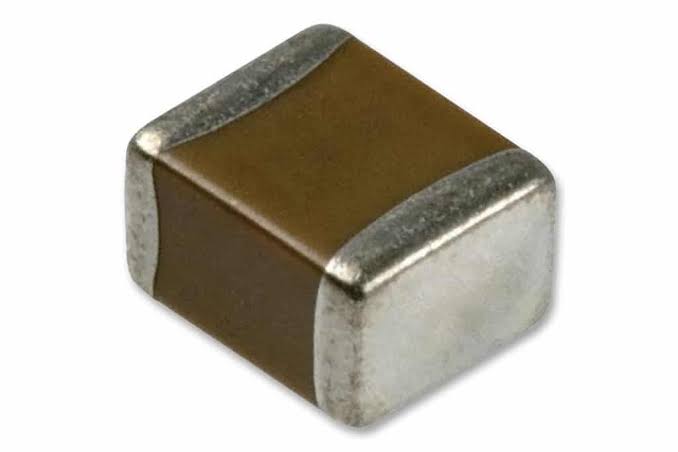
A multilayer ceramic capacitor, or MLCC, is one of the smallest and cheapest parts in any electronics Bill of Material (BoM): a passive component that stores and releases electrical charge to stabilize power delivery on a board. A single unit costs a fraction of a cent to a few dollars depending on the specification. Individually, nobody budgets around one. In aggregate, they are now driving real cost and delivery risk across the electronics supply chain.
The reason is scale, not scarcity of raw material. A single AI server rack cabinet can require up to 440,000 high-end MLCCs, eight to ten times the count in a standard server. When a part that cheap starts moving a bill of materials, the signal is not that the part got more expensive in isolation. It is that the count per board changed by an order of magnitude, and cost engineering teams that still model MLCCs as a rounding error are the ones getting surprised at the next true-up.
TrendForce's June 2026 MLCC industry research traces the mechanism directly to board redesigns for AI accelerators. During validation of its MI450 platform, AMD replaced every aluminum electrolytic and tantalum capacitor in the BoM with MLCCs. The effect on one part number alone: usage of a 47μF 2.5V X6S 0402 MLCC rose from 1,440 units per board to 10,544 units per board, a 632 percent increase. On NVIDIA's Vera Rubin platform, a 100μF 4V X6S 0805 MLCC rose from 320 to 500 units per board. Neither change reflects more electronics being built. Both reflect the same board carrying far more of the same constrained part.
Neither of those percentage changes is a cost figure on its own: they are unit-count changes. But lay a 632 percent count increase on one line item next to a 30 percent portfolio-wide price increase (below), and the arithmetic is direct: a specification decision made for validation or reliability reasons, with no cost review attached, can move a board's MLCC spend by several multiples before anyone treats it as a sourcing event.
Supply is not catching up quickly. High-end MLCC capacity expansion runs 18 to 24 months, and the specifications in demand, sub-micron dielectric films for small-size, high-capacitance parts, carry lower yields, so effective capacity per production line runs at roughly a tenth of standard-part lines. Murata began mass production of its most advanced MLCCs at the end of 2025; Samsung Electro-Mechanics followed in March 2026. Murata's April 30, 2026 earnings release committed an additional ¥80 billion in capital expenditure for data-center capacitor demand, split across fiscal 2026 and 2027 and concentrated on the Izumo plant. Even that capacity is not expected to fully ramp until 2027.
The price response has been immediate and broad. Effective August 1, 2026, Samsung Electro-Mechanics raised shipment prices across its entire MLCC portfolio by 30 percent, spanning every category, consumer through automotive through AI server, with no specification exempted. Taiyo Yuden moved first, raising automotive and server-grade parts 10 to 30 percent and consumer-grade parts 6 to 13 percent in April, then issued a second increase effective September 1, citing rising costs for barium titanate powder, nickel powder, and rare earth additives. TrendForce also reports Yageo raised capacitor prices roughly 50 percent on July 1 and Walsin Technology raised consumer MLCC prices 5 to 15 percent, so the increases are not confined to the two largest suppliers.
Lead time is moving the same direction. Book-to-bill ratios at the major Japanese and Korean suppliers have risen steadily since April 2026, and lead times on constrained high-capacitance X6S specifications have stretched from eight weeks to as long as twenty. Buyers who locked in long-term agreements are largely insulated: Samsung Electro-Mechanics disclosed two AI server MLCC agreements in July alone worth roughly 745 billion KRW, with delivery locked through 2027, and its AI MLCC customer base under long-term agreement has grown past ten accounts. Buyers without an agreement are competing for whatever allocation is left, at spot prices, on parts nobody thought to negotiate a year ago.
Every other chokepoint this cluster has covered concentrates in one place: a strait, a smelter, a single-source material. See The Copper Squeeze for how a single input material moves cost through midstream concentration. MLCCs concentrate nowhere and everywhere. The part is cheap and it appears on nearly every board a manufacturer ships, at counts running into the thousands. A 30 percent price increase on a two-cent part reads as noise on any single line item and as a material cost event once it is multiplied across a BoM's full MLCC content.
This is where Muir AI's BoM comprehension matters as much as supply visibility. A platform that reads a BoM at the component level, not just the top line items, can flag concentration in a constrained specification family the same way it would flag a sole-source supplier: how many line items share the same MLCC class, how exposed a design is to the next price notice, and what a 30 percent move on that class does to total product cost before the invoice arrives rather than at the next quarterly true-up.
TrendForce expects the demand drivers converging in late 2026 to turn a latent supply risk into a tangible shortage, with meaningful relief unlikely before 2027. Three moves are available in the meantime.
First, reprice active BoMs now against current MLCC pricing rather than the quote a design was costed against a year ago. The gap compounds every time a supplier issues a new notice. Second, treat a specification change, such as a dielectric class swap or a capacitance bump made for a validation fix, as a cost event with a review step, not just an engineering sign-off, since that is exactly the mechanism behind the AMD and NVIDIA board-level increases described above. Third, where reliability specs allow it, model the cost of qualifying an alternative process or supplier for the constrained family against the cost of holding position. Should-cost modeling makes that comparison tractable across process, geography, supplier, and material, without waiting for a physical requalification to find out which option wins.
None of that requires predicting exactly when the shortage ends. It requires knowing, line by line, how much of a given BoM sits in a part that used to be too cheap to notice.
Ready to see how much of your BoM is exposed to a constrained MLCC specification? Book a demo and Muir will show you the exposure before the next price notice does.
An MLCC, or multilayer ceramic capacitor, is a small passive component that stabilizes power delivery on nearly every electronics board. It has historically been treated as a negligible line item because unit cost is a fraction of a cent to a few dollars. AI accelerator boards now use tens of thousands of MLCCs per unit and manufacturers have raised prices up to 30 percent across entire product lines in 2026, so the aggregate cost across a Bill of Material (BoM) with thousands of MLCC line items is no longer negligible.
Past MLCC shortages were largely demand-cycle driven. The 2026 shortage is tied to a structural change in board design: AI accelerator platforms are replacing other capacitor types with MLCCs and increasing MLCC count per board by several times, while high-end manufacturing capacity takes 18 to 24 months to expand and yields on the required specifications remain low.
Industry research firm TrendForce expects demand drivers to converge in late 2026, turning the current supply tightness into a more acute shortage, with meaningful capacity relief unlikely before 2027 as new production lines from major suppliers reach full output.
Reprice active Bills of Material (BoMs) against current MLCC pricing rather than the quote used at design time, treat specification changes such as a capacitance or dielectric class swap as a cost review event rather than an engineering-only decision, and model the cost of qualifying an alternative supplier or process against the cost of holding position on a constrained part.

Don't worry, we don't spam.


Understand cost, navigate tariffs.

Drive deeper intelligence into product design cycles.

Scaled PCFs and reduction insights.

Determine your full supply chain and its cost.

Baseline your footprint and decarbonize.
Building Product Intelligence.
Find open roles at Muir.
Muir has plans for any scale.


