Contact us

Thank you for contacting us!

Your submission has been received and we'll be in contact with you shortly.

Return home
Oops! Something went wrong while submitting the form.
Solutions

Navigate Tariffs, Build a Plan Save millions

Classify accurately, forecast landed costs, and stay ahead of regulatory swings with product intelligence
Header image

Trusted by top companies

Tariff Analysis

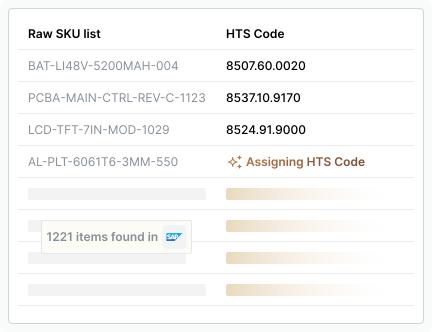
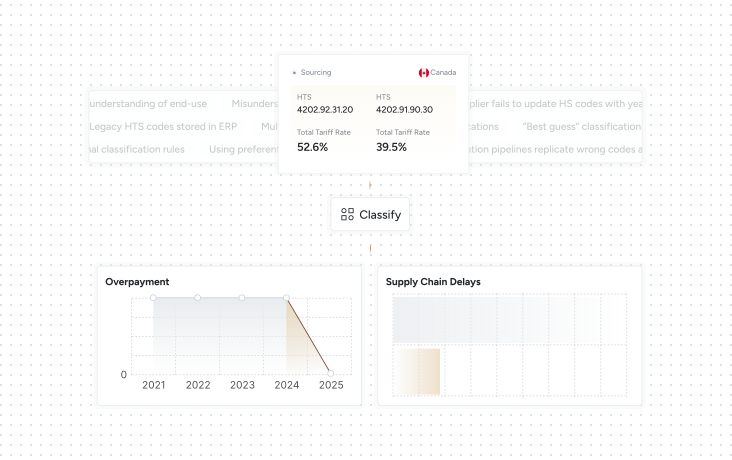
Automate HTS classification for any item

Muir determines the HTS for every SKU in your ERP

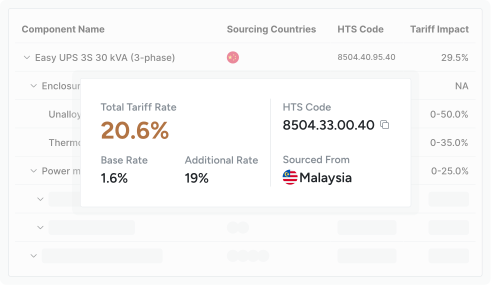
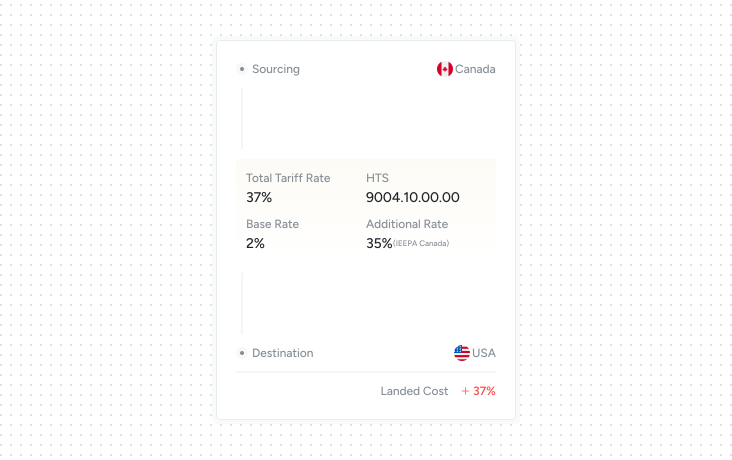
Instantly calculate tariff exposure for any product or BOM

Up to date rates for your products for both base and additional rates such as Section 232

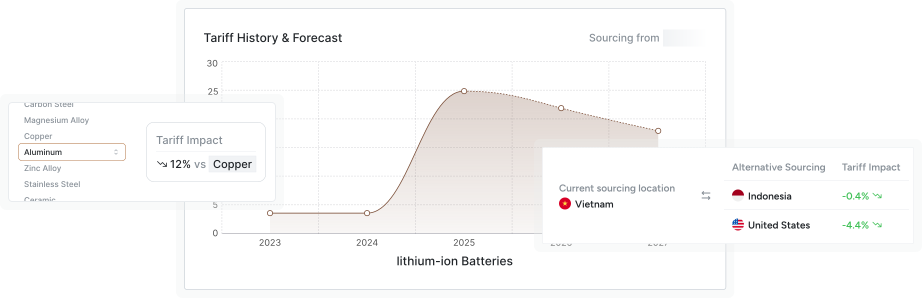
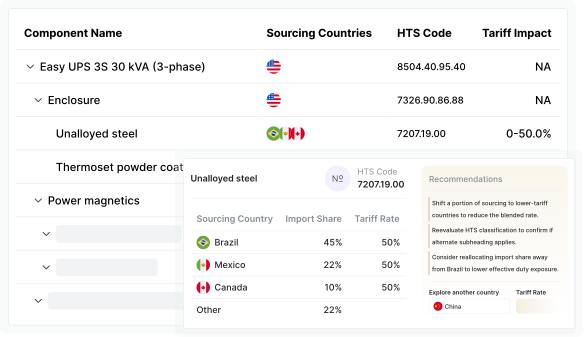
Eliminate fees before they happen

Explore alternative suppliers, product designs and make vs buy strategies to reduce the fees for a given product

Why Muir

Case Study

US manufacturer regained control of tariff costs across 10,000+ global SKUs
After paying $100,000s per month in duties across 10,000+ globally sourced SKUs, the team gained a clear view of accurate HTS codes and tariff rates. Now they make confident build-vs-buy and sourcing decisions with a roadmap that reduces long-term tariff exposure.
1000+
SKUs accurately classified
$100,000s
unexpected tariff exposure identified
2x
faster sourcing and build-vs-buy analysis
Full visibility
forward-looking tariff insights

Better decisions
start with clear product intelligence

Frequently Asked Questions

How do AI systems improve the accuracy of HTS (Harmonized Tariff Schedule) classification?
Classifying products manually is prone to error. Similarly using simple LLM chat bots can result in incorrect outputs. Muir’s platform uses advanced data processing and AI techniques to map raw product descriptions directly to the most accurate 10-digit HTS codes. The engine cross-references historical customs rulings and technical specifications to minimize misclassification risks, while providing an iterable review process for human-in-the-loop verification.
Does Muir’s tariff classification account for Section 301, 232, and other import tariffs?
Yes. A true should-cost model must include the landed cost. Muir's models consider all relevant US import tariffs, including base rates, and Section 112, 232, and 301 tariffs. The AI also runs assessments on potential tariff stacking and the implications of specific material input
Can AI identify alternative sourcing strategies to lower duty rates?
Absolutely. Advanced platforms don't just classify; they recommend. Muir analyzes your current sourcing footprint and identifies alternative countries of origin to optimize landed costs. Users can also run "what-if" scenarios to test material substitutions that could qualify products for lower duty rates.
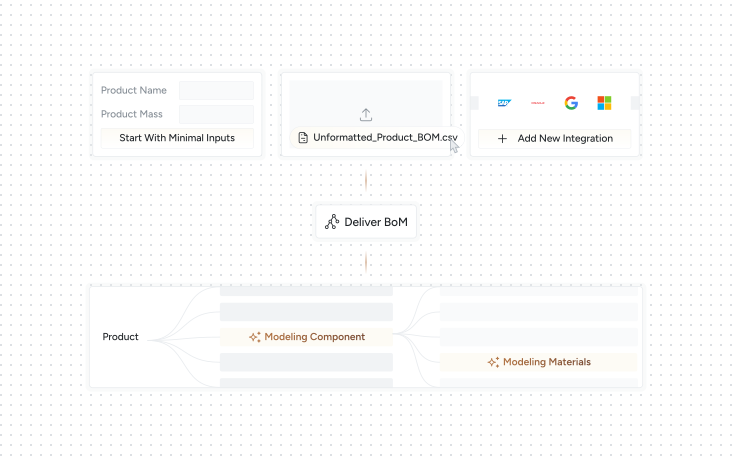
What is a Synthetic Bill of Material (BoM) and how does Muir generate it without supplier inputs?
A Synthetic BoM is an AI-generated approximation of a product's material makeup and manufacturing processes, used when primary supplier data is missing or incomplete. Muir’s BoM engine is built on our proprietary materials and manufacturing dataset. Combined with AI search, it takes simple procurement data (product name, mass, and supplier) and reconstructs the likely material composition for a product. This allows engineers and supply chain teams to instantly analyze thousands of SKUs without waiting for vendor quotes.
Is my company’s proprietary data secure when using Muir?
Yes. Enterprise AI tools must ensure your data is never used to train public models. Muir employs enterprise-grade security, including SOC 2 Type II compliance and data encryption at rest and in transit. Your proprietary data remains completely siloed and accessible only to your authorized users.
Can Muir integrate with existing ERPs like SAP, Oracle, or NetSuite?
Yes, Muir offers API-based integrations and bulk-upload capabilities that ingest data directly from your existing ERP or PLM systems. Because our AI is highly flexible, it eliminates the need for manual data cleaning and can easily handle obscure part numbers, messy data, or incomplete BoMs.
How does a "Human-in-the-Loop" process improve AI-generated product insights?
While AI automates heavy data processing, "Human-in-the-Loop" ensures accuracy by keeping subject matter experts in control. Muir believes in transparent AI; every classification, footprint, or cost model we generate includes the underlying logic and source data. This allows your cost engineers or sustainability professionals to verify, override, or fine-tune results. Refinements are then stored so your organization can reference the updates in the future.
How do you pronounce Muir?
Don't worry, we have all been there! For those struggling to say Muir, it rhymes with pure.