

September 2026
Helping SEMI Address the Emissions Data Gap for Semiconductors




Thank you for registering


September 2026
Selected by UpLink and the World Economic Forum for using AI to make supply chains more transparent, resilient, sustainable, and accountable.
Looking to subscribe to our newsletter? Click here.
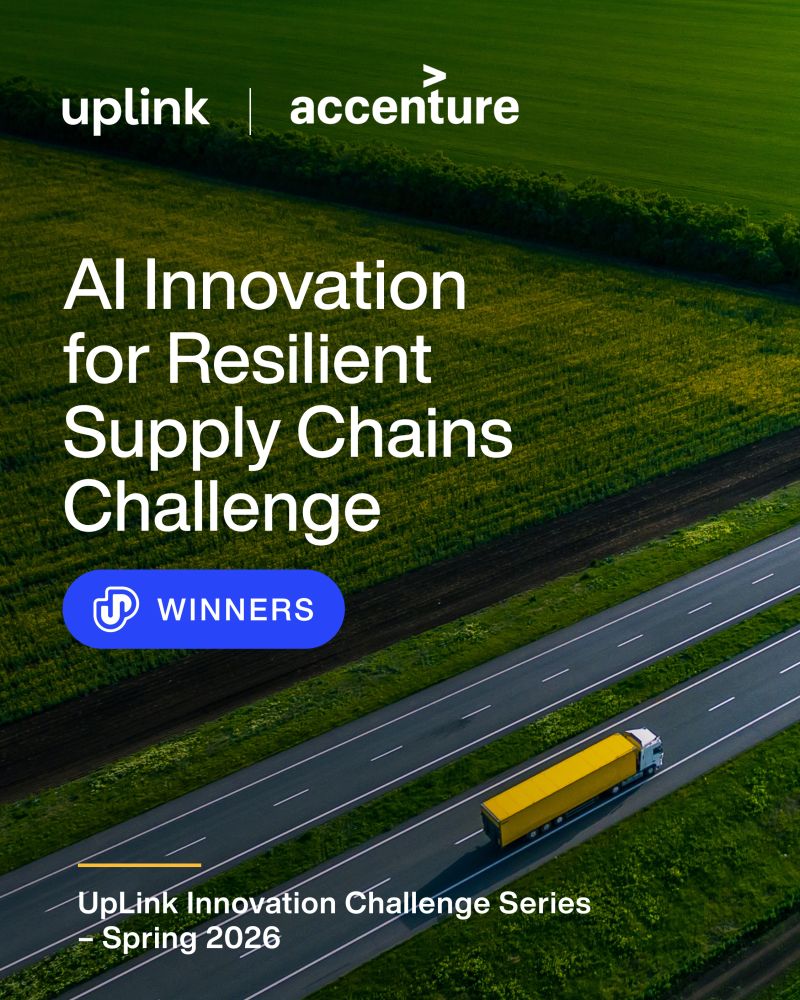
We're proud to share that Muir has been selected as a winner in the World Economic Forum's UpLink challenge, AI Innovation for Resilient Supply Chains. Run by UpLink with Accenture as part of the Forum's Next Frontiers of Operations Initiative, the challenge set out to find companies using AI to rethink how supply networks are designed, sourced, and coordinated — and to build in resilience, sustainability, and trust from the start rather than bolt them on afterward.
Most supply chain decisions are still made without a clear picture of what a product is actually made of, how it's made, and where. Procurement and sourcing, cost engineering, and R&D work in separate tools, separate teams, and separate spreadsheets — and by the time a disruption or cost driver arrives, the data needed to respond is hard to pull together quickly. The result is the fragmented, point-solution approach the challenge was created to move past.
Muir takes a different starting point. We build a model of the product itself — a graph of its materials, manufacturing steps, and supply chain, with cost, carbon, and manufacturing intelligence layered on top. Because the model traces a product down to the component and the process, the same foundation answers questions that usually require multiple tools: what a part should cost, what its carbon footprint is, whether there are credible material alternatives, where a sourcing chokepoint hides, and how a tariff or a raw-material squeeze changes the math. And where primary data doesn't exist — which is most of the time — Muir models it, so teams can act on a complete picture instead of waiting for one.
That is what makes a supply chain resilient in practice. Resilience isn't a dashboard to check after something breaks; it's the ability to see the exposure before it becomes a problem, and to weigh a design change, a second source, or a new supplier while there's still time to do something about it. The challenge's priorities — visibility across every tier, room for small and mid-sized suppliers, sustainability built into the decision, and governance you can trust — are the same outcomes our customers are already using product intelligence to reach.
Being recognized by the World Economic Forum is hugely gratifying. The problems worth solving here are bigger than any one company's bill of materials. They sit across industries, across borders, and across the corporates, investors, and policymakers who shape how global supply chains actually work. That's the network UpLink opens up, and we intend to put it to work.
Our thanks to UpLink, the World Economic Forum, and Accenture for the recognition, and to the Muir team and customers who have pushed this work forward. We're just getting started.
If you want to see what product-level intelligence looks like for your own supply chain, book a demo and see how it works in practice.

Don't worry, we don't spam.


Understand cost, navigate tariffs.

Drive deeper intelligence into product design cycles.

Scaled PCFs and reduction insights.

Determine your full supply chain and its cost.

Baseline your footprint and decarbonize.
Building Product Intelligence.
Find open roles at Muir.
Muir has plans for any scale.


