


September 2026
Muir AI Named a Winner in the World Economic Forum's (WEF) AI for Resilient Supply Chains Challenge




Thank you for registering


June 2026
In an AI data center, the constraint isn't just the chips, it is also the power equipment that energizes them. A look at how grid chokepoints stall buildouts, with xAI's Colossus as the case study, and how to find alternatives before the schedule slips.
Looking to subscribe to our newsletter? Click here.
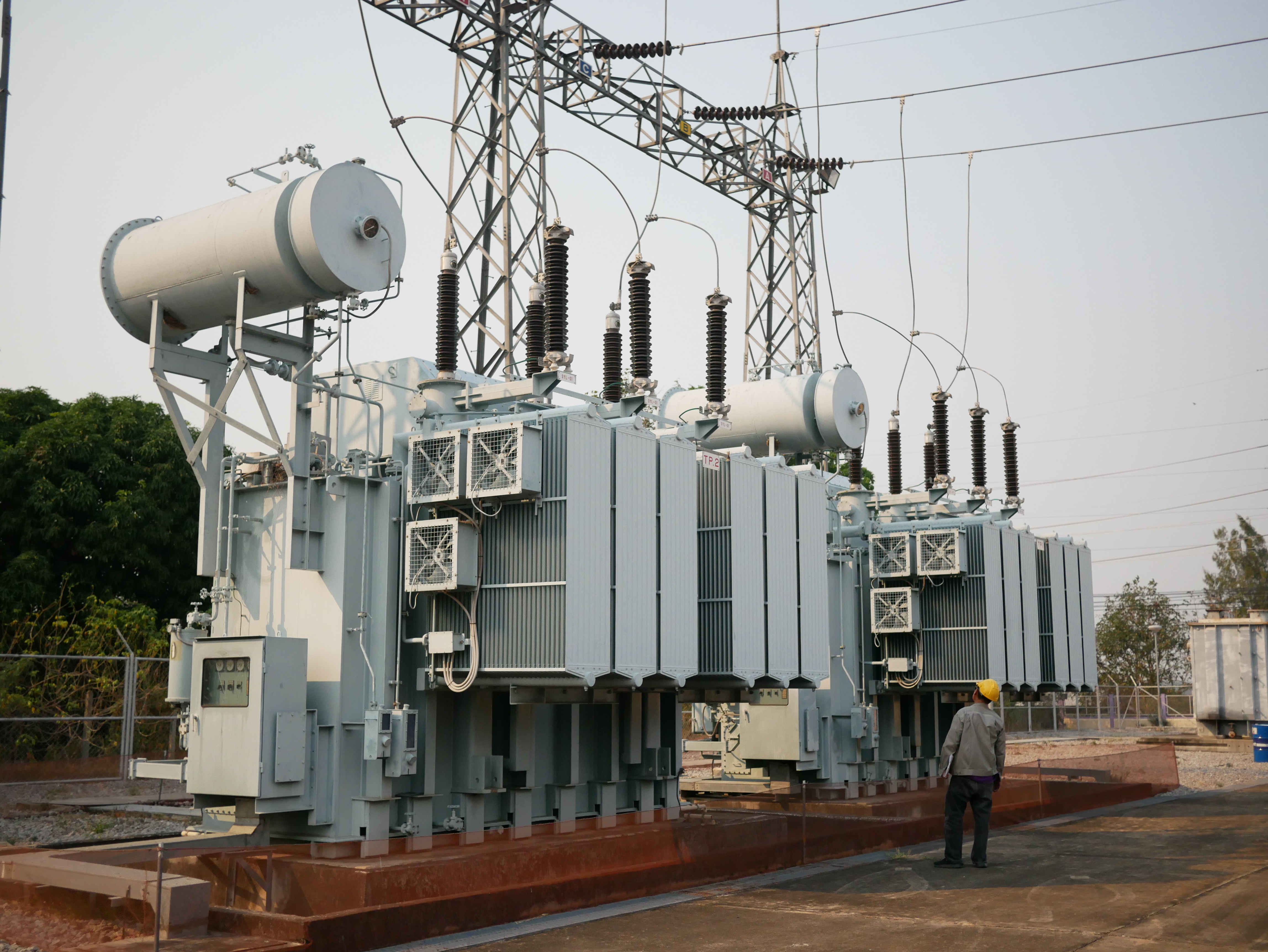
The bottleneck in an AI data center is rarely just the chips. Servers and accelerators ship on a scale of weeks. The equipment that delivers electricity to them does not. Across the United States, a large share of announced 2026 data center capacity has slipped or been cancelled, and the reason is consistent: the grid connection, and the hardware that makes it work, is not ready when the building is.
That hardware is easy to overlook on a project plan. A hyperscale site needs large power transformers, high-voltage switchgear, and often on-site generation all designed to order. Each of those has become a chokepoint: a component with no ready substitute and a lead time measured in years rather than months. When one of them slips, the whole project waits, no matter how many servers are sitting in crates.
The clearest recent example is xAI's Colossus supercomputer in Memphis. When the first phase came online in 2024, the local utility could supply only a small fraction of the power the cluster needed. The grid connection at the site started in the single-digit megawatts and grew over months toward roughly 150 MW, well short of a cluster designed to draw several hundred.
Rather than wait years for the grid to catch up, xAI energized the site with on-site natural gas turbines. By spring 2025, aerial imagery showed roughly three dozen turbines installed on the campus, supplying the bulk of its power. For the next phase, xAI received approval for 41 additional gas turbines across the state line in Mississippi, and shifted turbines between sites as permanent grid capacity came online.
The turbine route carried real costs, including local air-quality and permitting disputes that remain unresolved. The operational lesson holds regardless of the tradeoff: the company that controlled its own power timeline kept building, and the constraint that would otherwise have stalled the project sat upstream of anything in the server rack.
A chokepoint is a single component or supplier that gates the entire schedule because no qualified alternative is available in time. In a data center, the usual suspects are the components that step grid power down and route it safely through the building: large power transformers, high-voltage switchgear, and grid-tie batteries. Electrical equipment is a small share of total project cost and a large share of the schedule risk, which is exactly why it gets underweighted in planning.
The numbers are stark. Standard large power transformers now average well over two years of lead time, and generator step-up units, which connect on-site generation to the grid, run longer still, with some orders quoted at four years, according to Wood Mackenzie survey data reported in 2026. Roughly 80 percent of US power transformer supply is imported, concentrating the risk in a handful of overseas plants. Large-frame gas turbines tell a similar story: GE Vernova has reported a backlog that keeps its large-frame turbines largely spoken for past 2028, with data center demand a growing share of orders.
Three features make these components dangerous to a schedule: long and lengthening lead times, geographic concentration of supply, and the absence of a drop-in substitute. A transformer is not something you reorder from a second vendor next week. Each feature turns a routine procurement line into a single point of failure for a billion-dollar project.
Most buildout teams track their direct vendors well. The general contractor, the switchgear integrator, and the turbine supplier all sit one tier away and get attention. The part that actually slips the date usually sits further upstream, where visibility fades.
A turbine supplier may be on schedule while the specialized castings or controls inside its units are not. A switchgear package may depend on the same overseas transformer-core supplier as every competing project in the region. None of that appears in a tier-1 supplier list. It appears as a delivery date that moves three months before commissioning, after the alternatives that could have absorbed the slip are themselves sold out. The same concentration that drives the original shortage also closes the exits: when one upstream plant supplies many projects, a slip at that plant lands on all of them at once, and the substitute everyone reaches for has the same queue.
Seeing the exposure means reading the supply chain the way you read a bill of material (BoM): several layers deep, with lead time and country of origin attached to each node. Teams that map that picture early can act while substitution is still possible. Teams that do not inherit whatever the market leaves them.
The operators who keep building treat power equipment as a supply chain to be mapped, not a line item to be ordered. That means tracing the long-lead components several tiers up, identifying where supply concentrates, and qualifying alternatives before a date moves rather than after.
The alternatives exist. On-site gas turbines kept Colossus running. Rapidly deployable fuel cells have become a second path: Bloom Energy agreed to power Oracle Cloud data centers with on-site fuel cells deployable in about 90 days, and signed a gigawatt-scale supply agreement with American Electric Power. On the equipment side, suppliers are adding capacity, including Siemens Energy's first US power transformer plant in North Carolina. Each option only helps a team that saw the gap early enough to qualify it.
This is the work Muir AI is built for. Muir maps a product and its supply chain into a product twin and reads the BoM several tiers deep, surfacing where a single transformer, switchgear lineup, or turbine concentrates lead-time and geographic risk. Where a supplier will not share data or a unit cannot be sourced, the product twin still generates a defensible view from limited inputs, so teams can compare and qualify alternative parts and suppliers with generated Bill of Materials before a delivery date slips. In a data center buildout, the components that decide the schedule are the ones least likely to sit on anyone's dashboard, and mapping them early is what keeps a project on time.
If a single long-lead component can stall your project, you want to know which one, and where it comes from, before you commit to a schedule. Book a demo to see how Muir surfaces chokepoint risk across your supply chain and helps you qualify alternatives early.
It is a single component or supplier with no ready substitute that gates the entire project schedule. In data centers the common chokepoints are not servers but grid-tie equipment: large power transformers, high-voltage switchgear, and large-frame gas turbines, many of which now carry multi-year lead times.
Compute hardware ships in weeks, but the equipment that delivers power to it does not. Large power transformers average well over two years of lead time, and large-frame gas turbines are largely spoken for through 2028, so the energization date, not the chip order, tends to set the schedule.
Map the supply chain several tiers deep before committing to a schedule, identify components with long lead times or concentrated supply, and qualify alternatives early. Options that have let operators bypass grid delays include on-site gas turbines and rapidly deployable fuel cells.
Muir builds a product twin of a product and its supply chain, reading the bill of material several tiers deep to surface where lead time and geographic concentration create schedule risk. It also helps teams find and qualify alternative parts and suppliers when a primary source cannot deliver in time.

Don't worry, we don't spam.


Understand cost, navigate tariffs.

Drive deeper intelligence into product design cycles.

Scaled PCFs and reduction insights.

Determine your full supply chain and its cost.

Baseline your footprint and decarbonize.
Building Product Intelligence.
Find open roles at Muir.
Muir has plans for any scale.


