


September 2026
Helping SEMI Address the Emissions Data Gap for Semiconductors




Thank you for registering


June 2026
AI now handles the modeling work that defined the cost analyst role for two decades. Here is how the job, the team structure, and the hiring math change when cost engineers stop producing the number and start deciding what to do with it.
Looking to subscribe to our newsletter? Click here.
Only 36 percent of chief procurement officers say they are very confident in their ability to redesign their function around AI, according to a Gartner survey of CPOs published in May 2026. The capability is arriving faster than the org charts around it. Cost engineering teams feel this first, because the modeling work that defined the analyst role for two decades is now partly automated, and the question of what the role becomes is still open.
A cost analyst's week used to start with data preparation. A Bill of Material (BoM) arrives from engineering or a supplier, often carrying hundreds of line items and thousands of parameters, and almost none of it is clean. Roots are missing, levels are skipped, units do not match, suppliers sit behind ambiguous part names. Cleaning a single product's BoM can absorb more than 40 hours of a senior engineer's time before any modeling begins.
The cost of that work was never the hours on the timesheet. It was the savings the team did not surface while buried in cleanup: the design tradeoffs left unpriced, the supplier scenarios never run, the negotiations that opened without a defensible should-cost number. A team measured on the value it finds spends its scarcest weeks on data hygiene instead, and the company pays for that in unit costs it never questioned.
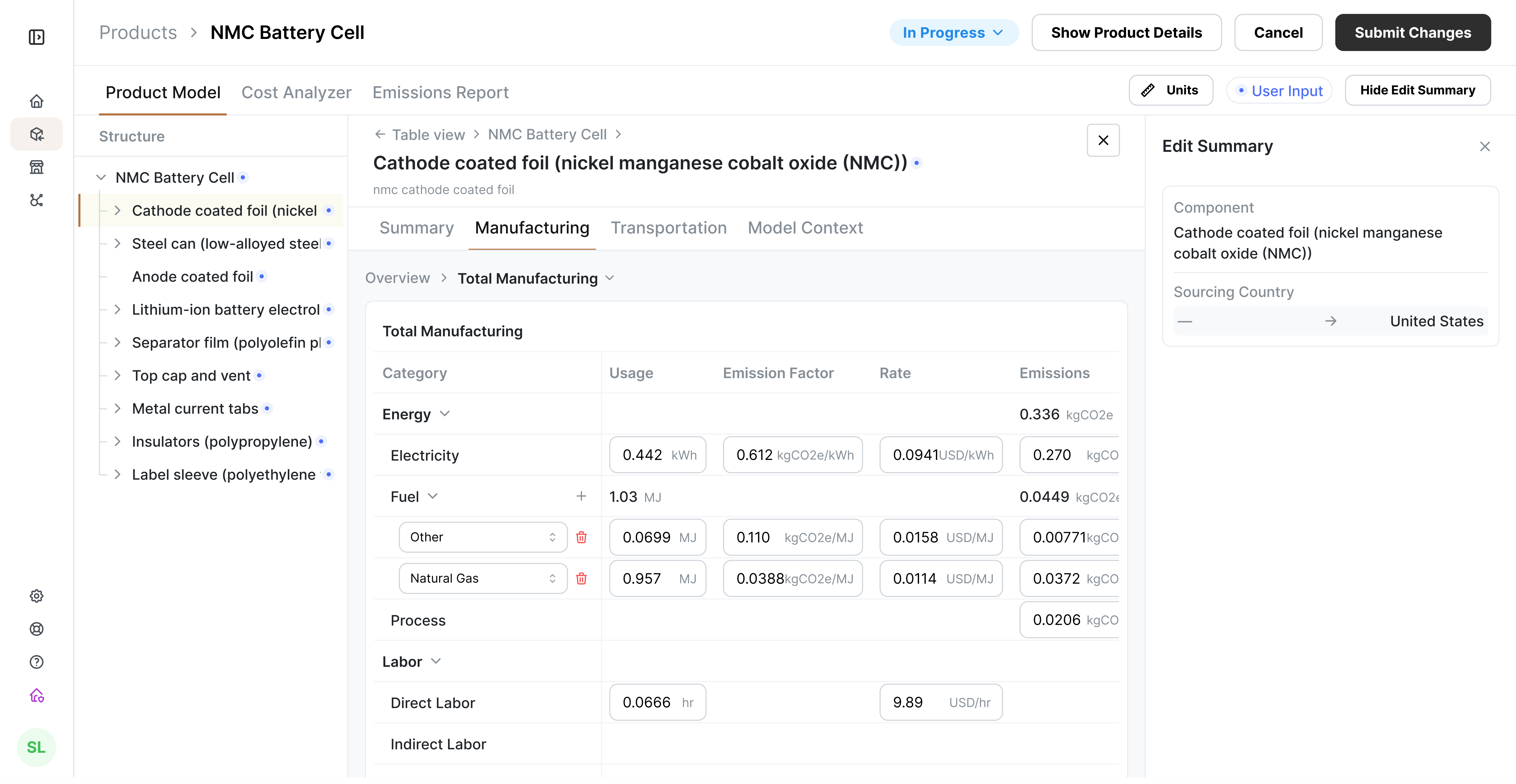
Modern cost intelligence platforms absorb the mechanical layer of the job. Muir AI uses BoM comprehension to structure an incoming file, flag errors, and fill gaps with a product twin, an AI-generated representation of the product built from material and manufacturing databases when supplier data or design specs are incomplete. Every inferred value carries provenance, so the engineer can see which fields were declared in the source, generated by the system, or edited by hand. That audit trail is what makes the output usable in a negotiation rather than a black box nobody trusts.
The pattern holds across the industry. McKinsey reports that roughly 40 percent of procurement functions have implemented or piloted generative AI, with analytics tools delivering up to 20 percent savings. The first tasks to move are the repeatable analytical ones: baseline modeling, scenario generation, and supplier benchmarking. None of these require the judgment that justifies a senior salary, and all of them used to eat the calendar.
Scenario generation is the clearest example. Where an analyst once built a single model for the one volume they were asked about, the platform produces the model across volumes, geographies, candidate suppliers, and material choices at once, so the baseline arrives already stress-tested. The analyst no longer asks “what does this cost?” so much as “which of these forty answers should we act on?”
When a model that once took a quarter runs in minutes, the analyst's value shifts to everything the model cannot decide on its own. Someone has to read a hundred scenarios and recommend one. Someone has to sit in a design review early enough to price a material or geometry change before the design freezes and the cost locks in. Someone has to walk into a supplier negotiation with the cost basis already mapped, and then make the case to finance and engineering for the decision the data supports.
Consider a make-versus-buy call on a machined housing. The platform can generate the should-cost model for both paths across volume tiers and candidate suppliers in an afternoon. What it cannot do is weigh the in-house capacity you would tie up against the lead-time risk of a single offshore supplier, or judge whether a 6 percent unit saving is worth the qualification time it costs. That weighing is the strategist's job, and it is the part of the decision the business actually pays for.
McKinsey frames this as procurement moving from a transactional role to a strategic driver of enterprise value. For the cost engineer the same shift is concrete: less time producing the number, more time deciding what the company does with it. The work that gets bigger is also the work that is hardest to automate, because it depends on context, relationships, and the willingness to defend a call across functions. More roles defined by scenario judgment, supplier strategy, and cross-functional influence.
If your cost engineering team still spends its best weeks on data prep and one-off models, that is the work a cost intelligence platform is built to absorb. Book a Muir demo and we will walk through how BoM comprehension and rapid scenario modeling free your team to do the strategist work that actually moves cost.
A cost analyst spends most of the time producing cost numbers: cleaning BoM data, building baseline models, and running individual scenarios. A cost strategist spends that time deciding what to do with the numbers, including interpreting scenario output, influencing design choices early, and leading supplier negotiations. AI is shifting the role from the first toward the second by automating the production of the model.
For most teams AI replaces tasks rather than people. It absorbs the repeatable analytical work such as data preparation, baseline modeling, and scenario generation, which frees cost engineers to focus on judgment-heavy work like negotiation and design influence.
The skills the tool does not have: interpreting ambiguous scenario output, building supplier negotiation strategy, collaborating with design teams early enough to influence cost, and defending a recommendation across finance and engineering. Engineers should still understand modeling well enough to trust and challenge the platform, then invest in the judgment around the model.
Start by separating work that is innately human from work that is AI-native, then staff to the human side. Move budget that used to fund data-preparation headcount toward strategist roles, which are harder to hire and slower to build. Because a strong strategist often finds more savings in one renegotiation than a data-prep role saves in a year, investing hear along with AI is the clearest ROI.

Don't worry, we don't spam.


Understand cost, navigate tariffs.

Drive deeper intelligence into product design cycles.

Scaled PCFs and reduction insights.

Determine your full supply chain and its cost.

Baseline your footprint and decarbonize.
Building Product Intelligence.
Find open roles at Muir.
Muir has plans for any scale.


