

September 2026
Muir AI Named a Winner in the World Economic Forum's (WEF) AI for Resilient Supply Chains Challenge




Thank you for registering


July 2026
Parametric estimating trades depth for speed; bottom-up trades speed for line-item defensibility. Where each method fits the product lifecycle, and how an AI-native approach runs both from one model.
Looking to subscribe to our newsletter? Click here.
Parametric cost estimating predicts what a product should cost from its measurable characteristics. The method builds statistical relationships between historical costs and cost drivers such as weight, material lass, geometry, and process complexity, then applies those relationships to a new product. The GAO Cost Estimating and Assessment Guide lists parametric as one of three core estimating methodologies, alongside analogy and engineering build-up, and ties its credibility to the quality of the historical data behind the cost estimating relationships.
The appeal is speed with minimal inputs. A cost engineering team can price an aluminum housing from its weight, alloy, and finishing requirements without ever seeing a routing sheet. Early in a program, nobody has a routing sheet, so parametric is often the only method available.
The limitation is resolution. A relationship built on past housings cannot see the specific supplier, the specific process choice, or the design decision that makes this housing different. Parametric outputs are directional envelopes: useful for screening concepts and setting budgets, weak in a negotiation.
Bottom-up estimating, called engineering build-up in NASA’s Cost Estimating Handbook, prices a product element by element. Each line in the Bill of Material (BoM) gets its own cost stack: material at market rates, conversion process, labor, overhead, tooling amortization, and supplier margin. The stacks roll up into a total the estimator can defend line by line.
That defensibility makes bottom-up the negotiation-grade method. When a buyer challenges a supplier quote, the argument stands on the stack itself: this material at this market rate, this process at this cycle time, this margin. A parametric envelope cannot carry that conversation.
The price of the depth is data. A bottom-up model needs a complete, clean BoM, and BoMs commonly carry hundreds of line items and thousands of parameters. Cost modeling teams can spend beyond 40 hours cleaning a single product’s BoM before modeling starts, and that time comes directly out of the analysis the model was supposed to enable. Muir has written about what dirty BoM data does to cost models; the same failure mode caps how many bottom-up models a team can realistically build.
The two methods map to stages of the product lifecycle rather than to types of company.
Parametric wins early. At concept and feasibility, the design changes weekly, the BoM does not exist yet, and the questions are directional: which architecture is affordable, what target cost the program should carry, whether a feature earns its cost. A fast envelope answers those questions while the answers can still change the design.
Bottom-up wins once a BoM exists. At detailed design, sourcing, and renegotiation, the questions are per line: which parts carry the margin, which process choice drives the conversion cost, where a quote departs from the market. Only a line-item model can answer at that resolution.
The traditional tool market hardened this split into a permanent choice. Parametric estimating suites serve program offices; DFM-style build-up tools serve manufacturing engineers. Separate licenses, separate models, separate data. A product crosses from one world to the other in mid-lifecycle, and the estimate rarely survives the crossing intact.
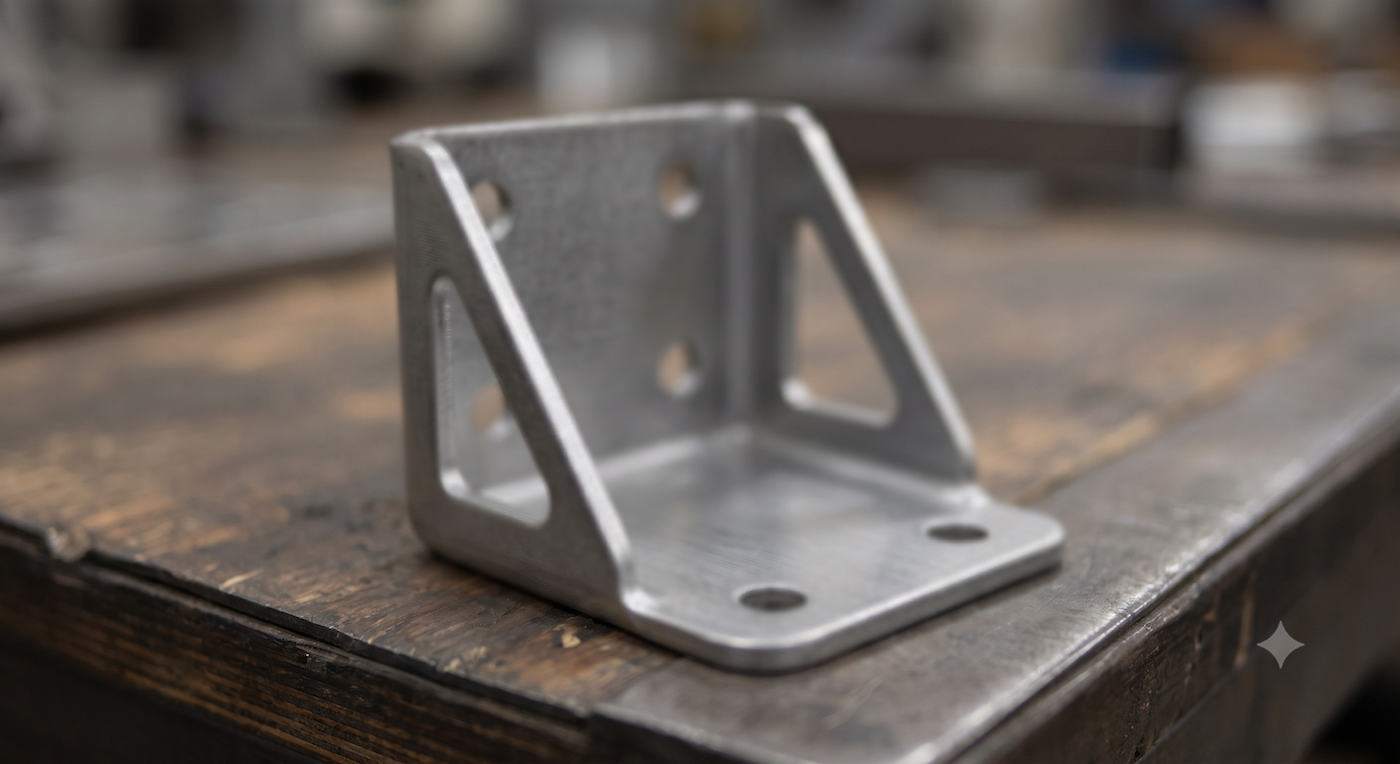
Consider a sheet-metal mounting bracket moving from concept to sourcing. At concept stage, a parametric estimate prices it from weight, material class, and a complexity factor drawn from comparable brackets. The output lands in a range wide enough to cover several manufacturing routes, because the model has no way to know which route the design will settle on. For a program budget, that range is enough.
By detailed design, the bracket has a drawing and a BoM line, and the estimate can become a build-up: steel at the current market rate, a stamping process with tooling amortized over the program, forming and finishing steps, overhead, and margin. Now the model can answer questions the parametric version could not touch. If the bracket were laser-cut and press-brake formed instead of stamped, the tooling line disappears and the per-piece conversion cost rises, so the build-up shows exactly where the crossover sits. If a supplier quotes above the modeled stack, the buyer can point to the specific line that diverges.
Neither estimate was wrong. Each answered the question its stage of the lifecycle was asking, with the data that stage had available. The failure mode is using the concept-stage envelope to argue a sourcing decision, or waiting for build-up-grade data before giving the design team any cost signal at all.
Choosing a method means taking a position on three axes at once. Parametric needs a handful of attributes and returns an answer in minutes, at envelope resolution. Bottom-up needs the full BoM plus process knowledge and, done manually, takes weeks per model, at line-item resolution. Neither method is more accurate in the abstract; accuracy follows from matching the method to the data actually available at that stage.
For a cost engineering team, the tradeoff that matters is opportunity cost. Weeks spent hand-building one bottom-up model are weeks not spent testing the scenarios where savings actually live: an alternative process, a different sourcing geography, a substitute material, a second supplier. A parametric-only shop forgoes savings too, leaving money on the table in every negotiation its envelope model cannot argue at the line level. Either single-method position gives up the savings the other method would have found.
The parametric vs bottom-up choice made sense when every model was built by hand and each method demanded its own tooling. AI-native cost modeling removes the constraint that forced the choice, because both methods become cheap enough to run on the same product at the same time.
Where a complete BoM exists, Muir AI’s BoM comprehension takes the raw file, including its structural quirks and gaps, to a working bottom-up cost model in about five minutes instead of a quarter. Where inputs are limited to a product name or a basic specification, the platform generates a product twin: an AI-built representation of the product that fills design and supplier gaps from material and manufacturing databases. The product twin begins as a parametric-grade estimate and hardens into line-item build-up as real data replaces inference. Every inferred value carries provenance, so the engineer can see which fields the system generated, which the source declared, and which were edited.
The lifecycle then reads as one continuous model. A concept gets a twin-based estimate in its first week, the same model absorbs the BoM at detailed design, and the line-item stack that results is the one the buyer takes into the negotiation. The method blend happens inside the workflow instead of across two toolchains.
Teams weighing where parametric should end and bottom-up should begin in their own workflow can book a demo and see both run on a live product.
Parametric estimating predicts cost from statistical relationships between historical costs and product attributes such as weight, material, and process complexity. Bottom-up estimating prices every element in the Bill of Material individually and rolls the elements up into a total that can be defended line by line.
Neither method is more accurate in the abstract. Bottom-up delivers line-item resolution and auditability when a complete and clean BoM is available. Parametric is often the stronger choice early in design, when the detailed data a bottom-up model requires does not yet exist. Accuracy follows from matching the method to the data on hand.
At concept and feasibility stages, for screening design directions, setting target costs, and building program budgets. Parametric works from a handful of product attributes and returns directional answers fast, while the design can still change in response.
Yes. An AI-native platform can generate a parametric-grade estimate from limited inputs such as a product name or basic specification, then deepen the same model into a full line-item build-up as BoM and supplier data arrive. The estimate follows the product through its lifecycle instead of being rebuilt at each stage.

Don't worry, we don't spam.


Understand cost, navigate tariffs.

Drive deeper intelligence into product design cycles.

Scaled PCFs and reduction insights.

Determine your full supply chain and its cost.

Baseline your footprint and decarbonize.
Building Product Intelligence.
Find open roles at Muir.
Muir has plans for any scale.


